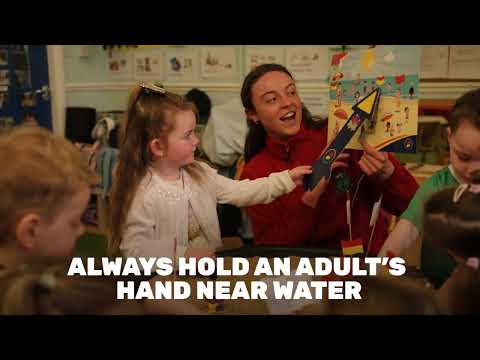
Alerts
Notifications

World Drowning Prevention Day

Thank you for taking part!

Thank you for joining us for World Drowning Prevention Day 2025! Learning to swim is so important, we're already looking forward to WDPD 2026.

WHO logo

What is World Drowning Prevention Day?

In 2023, the 76th World Health Assembly adopted its first-ever resolution on drowning prevention.

The resolution accepts the invitation of the United Nations General Assembly for WHO to coordinate actions within the UN system on drowning prevention and facilitate the observance of World Drowning Prevention Day on 25 July each year.

To mark this year's World Drowning Prevention Day, WHO will continue to focus on raising awareness of drowning as a public health issue, reminding people that anyone can drown, but no one should.

Drowning can almost always be prevented. Yet every year nearly a quarter of a million people lose their lives to drowning, and almost 82,000 of them are children aged 1 to 14 years old.

Drowning is abrupt, silent and shocking, with people often not realizing it’s happening until it’s too late.

What leads to drowning often happens in just a few seconds:
A small child slipping unnoticed into a pond or pool on a sunny afternoon;
Feeling invincible after a few drinks and jumping into the ocean for a swim;
Accepting that one extra passenger on the boat, despite knowing it might capsize;
Deciding it’s too much of a hassle to put on that life jacket.

So much can happen in a single moment. But with the right awareness and actions, what happens in those seconds can also be changed – for the better.

Seconds can save a life.

Prevention of drowning: Key findings from the WHO Global status report on drowning prevention 2024
World Drowning Prevention Day 2024 Celebrations
WHO: Anyone can drown, no one should
Together, We Can Prevent Drowning
Drowning prevention: celebrating 2023 achievements
Drowning prevention: celebrating 2021-2022 achievements
World Drowning Prevention Day 2022
WHO: Global report on drowning 2014

How can I improve my water safety skills?

Do one thing to prevent drowning.

Drowning doesn’t have a single cause or a single solution. But it can be prevented.

In recognition of this, the World Health Organization has called on stakeholders to “Do one thing” to improve the safety of people in and around water. WHO offered guidance on what individuals, groups, and governments could do, and the global response has been tremendous.

Some governments started the process of developing national strategies for drowning prevention. Groups hosted public awareness events and launched water safety campaigns. Countless individuals took action by learning and sharing new skills (swimming, safe rescue and resuscitation), or providing support to a drowning prevention group or activity.

One problem, many solutions.

Building on this momentum, WHO now continues to ask countries and partners to respond to their call to action for global drowning prevention:

  • Do one thing.
  • Improve one thing.
  • Add one thing.
World Health Organisation image saying: Do one thing. Improve one thing. Add one thing.

Individuals can:

Do one thing:

  • Share our campaign material
  • Enroll in a swimming and water safety class
  • Support local drowning prevention group

Improve one thing:

  • Share water safety advice in your community
  • Advocate for the benefits of improving your swimming and water safety skills based on personal experience
  • Become an active member of a local drowning prevention group

Add one thing:

  • Expand your knowledge on drowning prevention through reviewing resources on the WHO website
  • Hold a community event to commemorate World Drowning Prevention Day on 25 July

Groups can:

Do one thing:

  • Host a public event to share water safety information
  • Launch a drowning prevention campaign
  • Commit to delivering a new drowning prevention programme

Improve one thing:

  • Expand an existing drowning prevention programme
  • Identify a new partner for collaboration
  • Take time to evaluate and reflect on current efforts, considering how these could be improved

Add one thing:

  • Address a local drowning prevention priority which is currently neglected
  • Support the work of another organization or community
  • Contribute to regional or global drowning prevention efforts

Governments can:

Do one thing:

  • Develop or announce a new drowning prevention policy, strategy or legislation
  • Convene a national multi-sector roundtable on drowning and its prevention
  • Commit to support a drowning prevention programme domestically or internationally

Improve one thing:

  • Establish an evaluation mechanism for new and existing drowning prevention efforts
  • Strengthen advocacy for government-led drowning prevention efforts
  • Upscale an existing, successful drowning prevention programme

Add one thing:

  • Coordinate a national campaign to commemorate World Drowning Prevention Day on 25 July
  • Share key successes in government-led drowning prevention initiatives
  • Investigate how international drowning prevention efforts can be supported from your country

This year's themes

WHO are raising awareness of the six evidence-based, low-cost, drowning prevention interventions that countries and organisations can use to drastically reduce the risk of drowning.

These include:

  • Train bystanders in safe rescue and resuscitation
  • Teach school-age children basic swimming, water safety and safe rescue skills
  • Provide safe places away from water for preschool children, with capable childcare
  • Install barriers controlling access to water
  • Set and enforce safe boating, shipping and ferry regulations
  • Improve flood risk management locally and nationally
World Health Organisation image saying: Train bystanders in safe rescue and resuscitation Teach school-age children basic swimming, water safety and safe rescue skills Provide safe places away from water for preschool children, with capable childcare Install barriers controlling access to water Set and enforce safe boating, shipping and ferry regulations Improve flood risk management locally and nationally

Swimming lessons

Did you know that whilst enrolled in swimming lessons with East Riding Leisure you are entitled to free casual swimming?

What happens after World Drowning Prevention Day?

This is just a day to raise awareness in the run-up to summer when we all love to get back out in nature and cool off, but the lessons learnt are important all year round.

Build your strength and learn how to enjoy the water safely with swimming lessons for all ages.

Available at all of our leisure centres with a pool, find out more about swimming with East Riding Leisure.

Save and splash with a membership!

All our memberships include swimming. Plan on swimming more than once a week? You could save with our membership plans starting from just £15.50!

Become a member

Download resources

Title
Modified
Size

Water Safety

Learn more about how to #enjoywatersafely with these annual water safety campaigns run by RLSS, STA and WHO.

  • RLSS (Royal Life Saving Society UK) is the governing body of our lifeguards.
  • STA (Swimming Teacher's Association) is the governing body of our swimming instructors.
  • WHO is the World Health Organisation.

Each campaign only lasts a week or so, but water safety is important all year round.

Save and splash with a membership!
All our memberships include swimming. Plan on swimming more than once a week? You could save with a membership.
Sign up today